Lice Treatments - 3 Terrible Secrets
There are 3 Terrible Secrets the big lice treatment companies do NOT want you to know.
(And make sure you read this entire page because Secret #3 is the most shocking thing of all.)
Secret #1 - The Amount of Poison
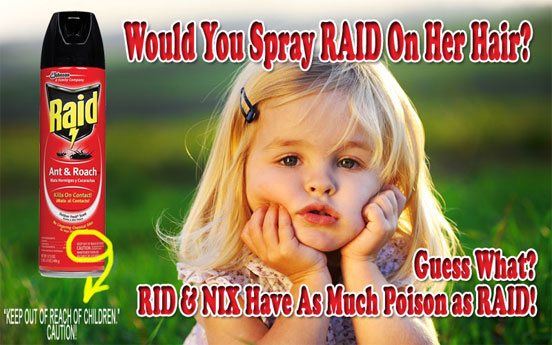
Rid and Nix have more poisons in them than a can of Raid. It’s shocking, but it’s true.
Take a look at the ingredients on a can of Raid; the active poison ingredients are emmaprothrin and cypromethrin.
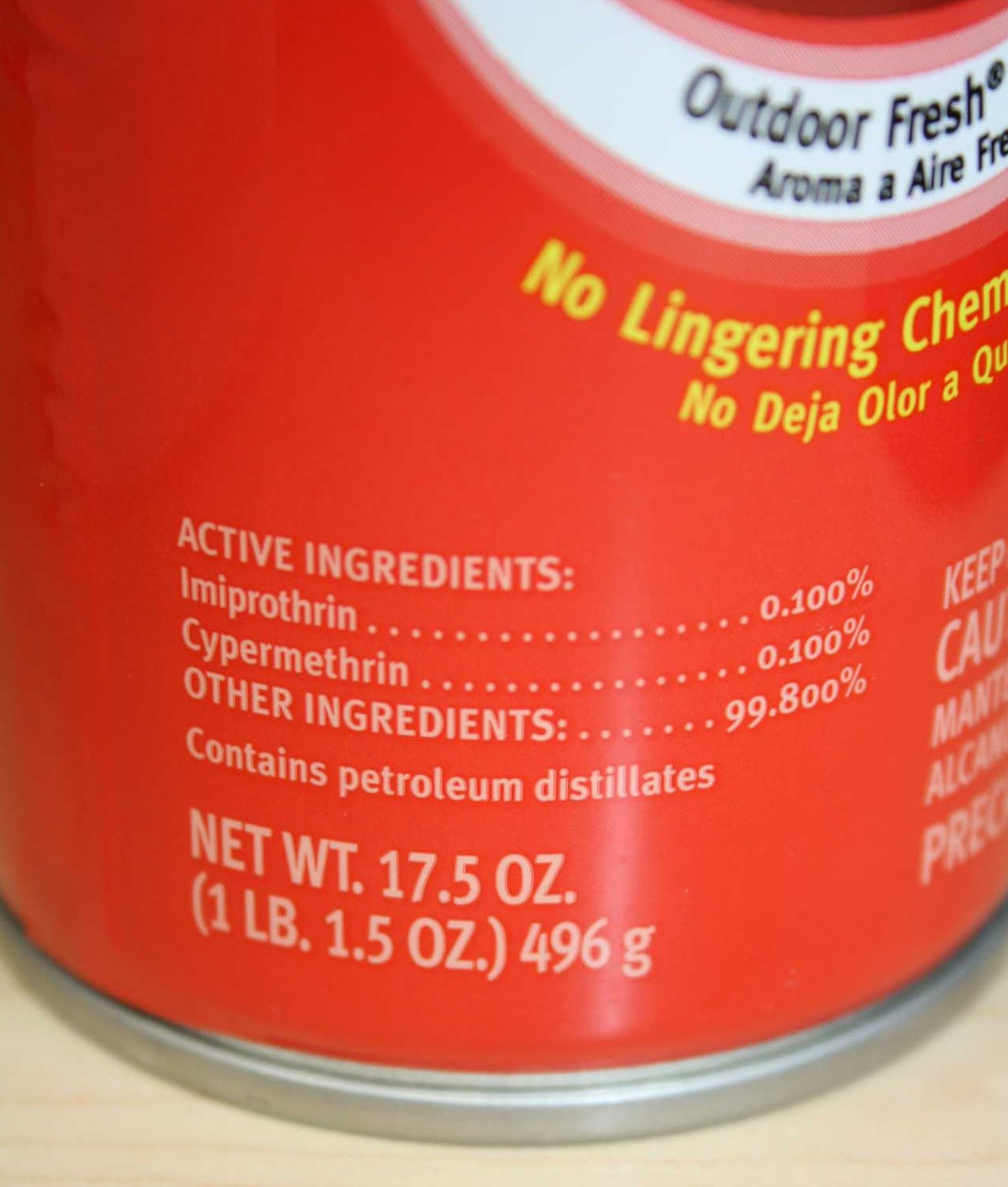
Those are both pyrethroids, which are similar to the poisons used in Rid and Nix. Notice how much of the poisons are in Raid: one-tenth of one percent each, for a total of two-tenths of one percent. That is barely any, but enough to kill bugs and deserve the warning, "keep out of reach of children".
Now let’s look at Rid.
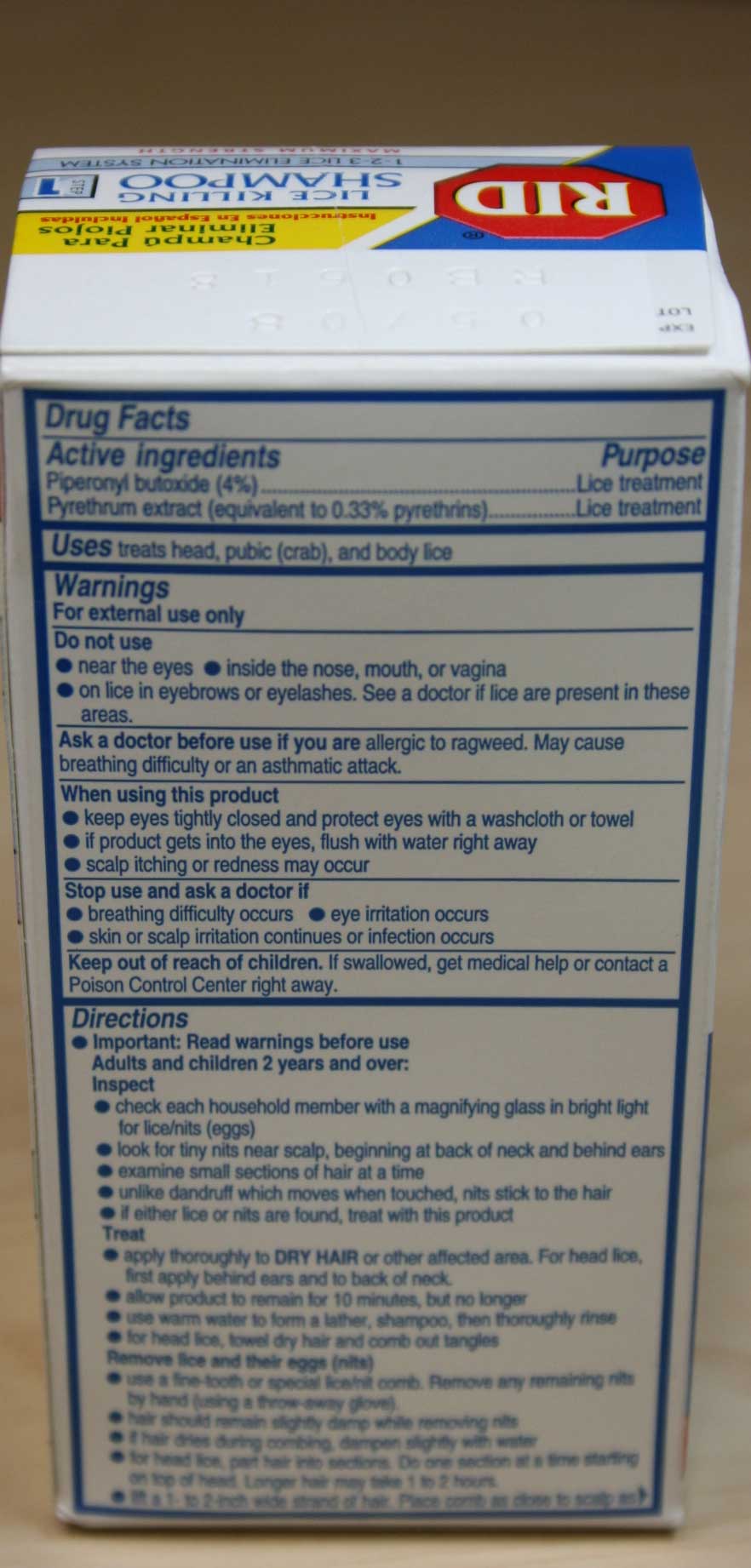
Rid has one-third of one percent pyrethrin. That’s more poison than Raid, yet people are putting it on their children all the time. In fact, people are not following the directions and they are overusing the poisons, exposing their children to far more danger from the poisons than even the manufacturers recommend.
Now let's look at Nix.
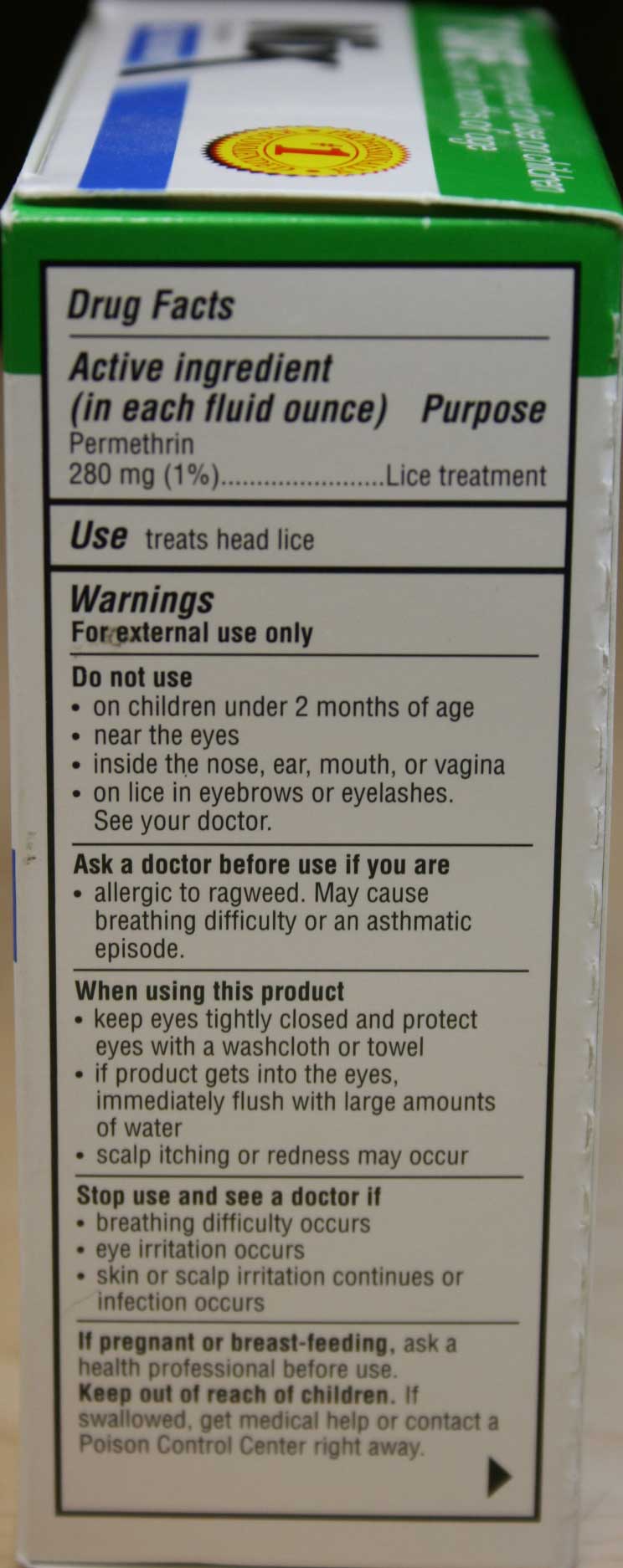
Nix has a full one percent permethrin. That’s five times the amount of poison in a can of Raid.
Would you spray your child’s head with a can of Raid? Using Rid and Nix is even worse!
Secret #2 - They don't work very well
Doctors and scientists proved many years ago that the poisons in Rid and Nix are no longer effective against head lice.
This fact has been making the news for the past year or so with all the stories about "super lice." But even as far back as 1999, scientists knew that the traditional treatments for lice were becoming ineffective.
Researchers collected head lice from children in the United States and Malaysian Borneo and tested the lice’s susceptibility to permethrin in a laboratory bioassay. The lice collected from previously treated U.S. children were substantially less susceptible to permethrin than the lice collected in Malaysia.
The strain of lice infesting the children in Malaysia had never been exposed to the poisons before, and in those children, the treatments were successful.
However, the children from the United States were infested with strains of lice that had been exposed to the traditional poisons for many decades, and the poisons were ineffective on those children.
The scientists concluded that permethrin did not affect head lice sampled from chronically infested U.S. children, and that head lice in the United States are less susceptible to permethrin than those in Malaysia.
This study was done in 1999, and in the many years since then, the problem has only gotten worse. It’s gotten so bad that mainstream media outlets frequently run stories about communities unable to win their battles with "Super Lice."
Secret #3 - The Shocker!
According to reports from the National Pediculosis Association (headlice.org), the poisons in traditional head lice treatments have been linked to acute leukemia.
According to webmd.com, a recent study concluded that the use of insecticidal shampoos to treat head lice appears to roughly double a child’s risk of developing leukemia.
This is unacceptable. Because of these shocking facts about the traditional poison-based head lice treatments, people need to stop using them.
They don’t work—doctors and scientists have proven they don’t work, the news is telling us they don’t work—and they double the risk of developing leukemia. This is very important, and we need your help to get the word out.
We Recommend:
So what do we do? What should parents use instead of the poisons? Well, we have a recommendation and a solution.
There is a company that was started by a family that had retired from organic farming over 20 years ago. They developed an all-natural treatment protocol for head lice. Their system works, and it works well. It kills the head lice and, more importantly, it kills the eggs—the nits.

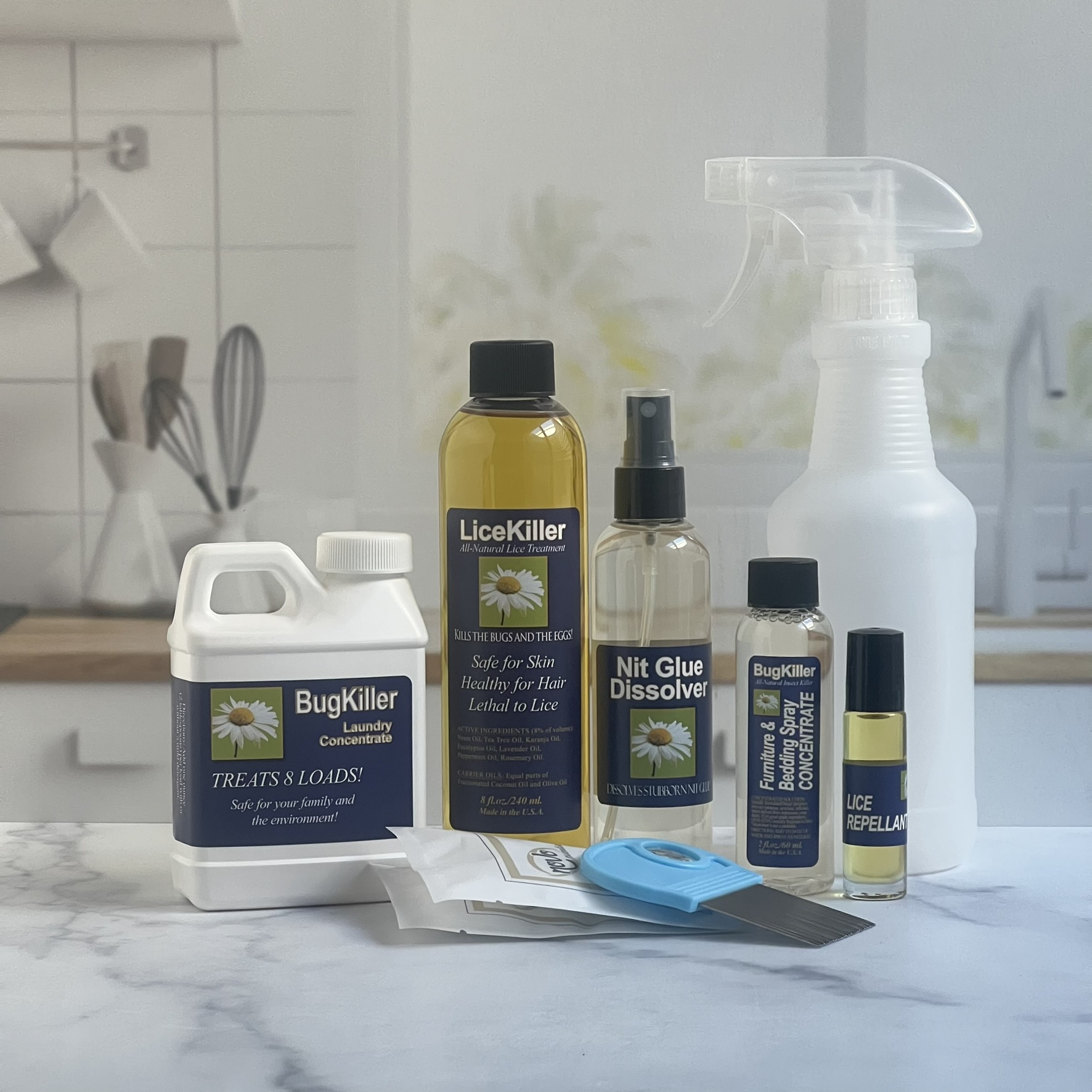
The small "Everything You Need Kit"

Their products are completely non-toxic to humans; they can be used daily if needed. And because it kills the eggs, head lice can never become immune to their products.
Their products are not the "cheapest" option. But we believe avoiding dangerous poisons that don't even work very well any more is more important than only choosing the least expensive solution. Would you agree?
Please click the button below to learn more about the LiceKiller products.
(NOTE: We are not compensated for this endorsement.)
References:
The study showing permethrin ineffective:
“Differential Permethrin Susceptibility of Head Lice Sampled in the United States and Borneo”
Pollack RJ, Kiszewski A, Armstrong P, et al.
Archives of Pediatrics & Adolescent Medicine—the journal now known as JAMA Pediatrics—September 1999;153(9):969–973. DOI: 10.1001/archpedi.153.9.969. Click here to read the full study on JAMA Network
National Pediculosis Association report
“Jesse’s Story”: Click here to read Jesse’s Story — National Pediculosis Association The page describes a mother’s account of her son Jesse, who was diagnosed with acute lymphoblastic leukemia after being treated with prescription lice treatment. She reports additional lice-shampoo exposures preceding later relapses and says that she subsequently found evidence suggesting a link between the pesticide, cancer, and neurological problems.
The WebMD story was based on:
“Household exposure to pesticides and risk of childhood acute leukaemia”
Menegaux F, Baruchel A, Bertrand Y, et al.
Occupational and Environmental Medicine. 2006;63(2):131–134. Click here to see the study at PubMed Central