
MothersAgainstHeadLice.org is NOT compensated for our reviews or information.
Over the Counter Lice Treatment: What Every Parent Needs to Know Before Spending Another Dollar
The science behind why drugstore lice treatments fail — and what actually works when your child has head lice.
If you're reading this, you're probably standing in the lice treatment aisle at CVS or Walgreens right now — or you just got home from there. Maybe the school nurse called. Maybe you found something crawling in your child's hair during bath time. Either way, your stomach dropped, and you want this dealt with tonight.
We understand. We've heard from over 100,000 parents in this exact moment.
Here's what we wish someone had told us before we wasted money on products that don't work: the most popular over the counter lice treatments in America have an exposed failure rate as high as 75%.
That's not an opinion. That's from published medical research, and we're going to show you exactly why — so you can make an informed decision before you spend a dime.
What Are OTC Lice Treatments?
When most parents hear "lice treatment," they think of the products on the drugstore shelf. The two most common are:
Nix (the active ingredient is permethrin, a synthetic pesticide)RID (the active ingredient is pyrethrin, a natural pesticide derived from chrysanthemums)
Both of these products work the same way: they attack the lice's nervous system, attempting to paralyze and kill them. When they were introduced in the mid-1980s, they were nearly 100% effective.
That was forty years ago. A lot has changed.
Why Over the Counter Lice Treatments Fail in 2026
The short answer: Lice have evolved to survive these products. Scientists call them "super lice," and they now exist in 48 out of 50 U.S. states.
Here's what the research shows:
The Science
Mayo Study
In the 1980s, permethrin-based products like Nix were 96–100% effective. By 2000, effectiveness had dropped to as low as 25–28%.— Mayo Clinic Proceedings; Journal of Medical Entomology
JME Study
A major study collected lice samples from 138 sites across 48 U.S. states and found that 98.3% of lice carried the genetic mutations that make them resistant to permethrin — the active ingredient in Nix.— Journal of Medical Entomology, 2016
PMC Study
A 2023 global meta-analysis found that 82% of head lice tested after 2015 are resistant to pyrethroid insecticides — the chemical class that includes both permethrin (Nix) and pyrethrin (RID).— Evaluation of Resistance of Human Head Lice to Pyrethroid Insecticides, PMC 2023
This isn't a fringe theory. The American Academy of Pediatrics, Mayo Clinic, and researchers at multiple universities have documented this resistance extensively. The lice didn't become "super" because they're bigger or scarier — they developed a genetic mutation called "knockdown resistance" (kdr) that makes their nervous systems immune to the very chemicals these products use.
Think of it this way: Nix and RID are trying to flip a switch in the lice's nervous system. But the lice have rewired that switch. The product goes on, sits there for 10 minutes, gets rinsed off — and the lice are completely unaffected.
The Problem OTC Treatments Were NEVER Designed to Solve
Even when these products did work on live lice back in the 1980s, they had a fundamental weakness: they cannot kill or remove the nits (lice eggs).
Here's why this matters:
A female louse lays 6–10 eggs per day. She cements each egg to the hair shaft using a protein-based glue that is extremely difficult to remove. This "nit glue" is not affected by pesticides, shampoos, vinegar, mayonnaise, or any home remedy you've read about online.
So even if an OTC product kills every live louse on your child's head (which, as we've shown, it probably won't), the eggs remain glued in place. They hatch in 7–10 days. And the cycle starts all over again.
This is why so many parents experience the nightmare of "re-infestation." It's usually not re-infestation at all — it's the original infestation that was never fully eliminated because the nits were never removed.
The OTC treatment cycle looks like this:
- Discover lice → Buy Nix or RID from the drugstore
- Apply treatment → Feel relieved
- Next day → Find lice again → Wait 7 days (OTC instructions)
- Apply OTC product second time
- Day or 2 later → Find lice AGAIN
- Start Googling "why won't lice go away"
If this sounds familiar, you're not alone. And you're not doing anything wrong. The product is simply not designed to break this cycle.
And here's something most parents don't realize: there's a reason OTC products tell you to wait 7–10 days between treatments. Two reasons, actually — and neither one is good news.
Reason #1: Their products don't kill nits. OTC treatments know they can't kill eggs. Their strategy is to have you wait until the nits hatch into live lice, then apply the product again to try to kill the newly hatched bugs. But as we've shown, the product probably won't kill them either — because they're genetically resistant.
Reason #2: Pesticide poisoning. These products contain real chemical pesticides. If you apply them more often than directed — which desperate parents are tempted to do when they see lice still crawling the next day — you risk actual pesticide poisoning. The warning labels aren't suggestions. This is why you can't just "keep applying until it works." The products are too toxic to use that aggressively, and they still won't solve the problem.
So you're stuck: the treatment doesn't work, the eggs are still glued to the hair, and you can't even reapply safely for another week. Meanwhile, the infestation grows.
We Recommend...
After testing dozens of lice treatments over nearly 20 years, MothersAgainstHeadLice.org recommends LiceKiller.com's "Everything You Need" kits — the only system we've found that solves both the live lice AND the nit glue problem in a single treatment session.
What Actually Works: The Two Problems OTC Products Can't Solve
If pesticide-based treatments can't kill resistant lice AND can't remove nits, what's the answer?
You need to solve both problems — and you need to deal with your environment too, because lice and viable nits don't just live on heads. They're on pillows, furniture, car seats, and clothing.
After testing dozens of treatment products and systems over nearly 20 years, MothersAgainstHeadLice.org recommends the "Everything You Need" kits from LiceKiller.com. Here's why:
Their system uses TWO different formulas that work together:
Formula 1: An essential oil formula that kills live lice. This is the most effective live-louse killing formula we have ever tested at MothersAgainstHeadLice.org. Unlike permethrin, which targets the nervous system (and which lice are now genetically immune to), this formula uses a completely different mechanism of action. Resistant lice have no defense against it.
Formula 2: An enzyme formula that dissolves nit glue. This is the key that OTC treatments are completely missing. The enzyme formula breaks down the protein cement that attaches nits to the hair shaft. Once the glue is dissolved, nits slide right off during combing — instead of staying stubbornly cemented in place, ready to hatch and restart the cycle.
Plus: Environmental treatment products. This is what most treatment systems leave out entirely. LiceKiller.com's Everything You Need kits include products to treat your furniture, bedding, laundry, car seats, and clothing — because eliminating lice from the head while ignoring the environment is how "mysterious" re-infestations happen.
Are these kits the cheapest option? No. A box of Nix costs $15 at the drugstore. LiceKiller.com's kits are a premium solution.
Are they the best? After nearly 20 years of testing and recommending products to over 100,000 families, MothersAgainstHeadLice.org believes they are — and it's not even close. When you factor in the cost of buying Nix three or four times, missing work, the stress on your family, and the weeks of dealing with a problem that won't go away, the "cheap" option turns out to be the most expensive one.
Our Recommendation
LiceKiller.com's Everything You Need kits combine their essential oil lice-killing formula, their enzyme-based nit glue dissolver AND environmental treatment products — all in one box. It's the treatment system MothersAgainstHeadLice.org has recommended since 2007.
"But I Need Something RIGHT NOW"
We hear you. When you discover lice, every instinct says to fix it tonight. That's exactly why the drugstore aisle is so tempting — it's right there.
But here's the reality: even if you drive to CVS right now and apply Nix tonight, the lice are overwhelmingly likely to still be there tomorrow morning. And the day after that. And next week. As we showed above, these products fail the vast majority of the time against today's resistant lice. The nits will still be glued to the hair shaft. The cycle will continue.
Parents who use OTC products commonly deal with lice for weeks or months before finding something that actually works. A couple of days of waiting for the right solution is nothing compared to months of re-infestation.
LiceKiller.com offers free 2-business-day FedEx shipping. Order today, and you'll typically have it in your hands within two business days.
What to do while you wait:
Here's a simple technique to slow down the infestation until your kit arrives: apply olive oil generously to the hair, then comb through carefully with a fine-tooth comb. The olive oil makes it harder for lice to grip the hair and makes combing more effective at removing live lice. It won't solve the problem — nothing will until you dissolve that nit glue — but it will slow things down and give you some control while you wait for the real solution.
Repeat the olive oil and comb routine each night until your Everything You Need kit arrives. Then follow the kit instructions and end this for good.
Common Questions About Over the Counter Lice Treatment
Q: Is it possible that Nix or RID will work for my family?
It's possible. Resistance levels vary by region, and a small percentage of lice populations remain susceptible to permethrin. However, with 98% of U.S. lice samples showing resistance mutations, the odds are not in your favor — and every day spent on an ineffective treatment is a day the infestation grows.
Q: What about prescription lice treatments?
Prescription options like Sklice (ivermectin) and Natroba (spinosad) are more effective against resistant lice than OTC permethrin products. However, they still don't address the nit glue problem, and they don't come with environmental treatment products. If nits remain cemented to the hair shaft and viable nits are still on your furniture and bedding, you're still at risk for the cycle to continue.
Q: Can I just comb the nits out?
Manual nit combing is part of any good treatment protocol, but nit glue is strong enough that combing alone leaves many eggs behind — especially in thick, curly, or long hair. Dissolving the glue first with an enzyme formula makes combing dramatically more effective.
Q: Why does MothersAgainstHeadLice.org recommend LiceKiller.com specifically?
We've been testing and evaluating lice treatment products since 2004. LiceKiller.com's system is the only one we've found that addresses all three aspects of a lice infestation: killing live lice (with their essential oil formula), removing nits (with their enzyme formula that dissolves nit glue), and treating the environment (furniture, bedding, laundry, car seats). Most products only address one of these. That's why families keep dealing with re-infestations.
Q: The kits are more expensive than drugstore products. Is it worth it?
A box of Nix costs about $15. If it worked, we'd recommend it. But when parents end up buying three or four rounds of OTC treatments, missing work to deal with ongoing infestations, and spending weeks stressed out — that $15 "bargain" ends up costing far more in money and misery than getting the right solution the first time. The families we hear from consistently say they wish they'd found LiceKiller.com before wasting money on products that don't work.
Q: I need help NOW. Can I really afford to wait for shipping?
LiceKiller.com offers free 2-business-day FedEx shipping, so you'll have the kit in your hands fast. But more importantly — if you buy Nix tonight and apply it, the lice will almost certainly still be there tomorrow. Parents commonly deal with lice for weeks or months using OTC products that don't work. Two business days of waiting for a solution that actually ends the problem is far better than months of re-treating with products that fail. While you wait, use olive oil and a fine-tooth comb each evening to slow things down.
Q: How are the essential oil and enzyme formulas different from other "natural" products?
Many products marketed as "natural" use diluted essential oils with minimal scientific backing. LiceKiller.com's essential oil formula is specifically formulated to kill live lice — it's the most effective live-louse killing formula we've ever tested. Their enzyme formula is a completely separate product that targets nit glue — the protein cement that attaches eggs to hair. These two formulas working together is what makes their system different from anything else on the market.
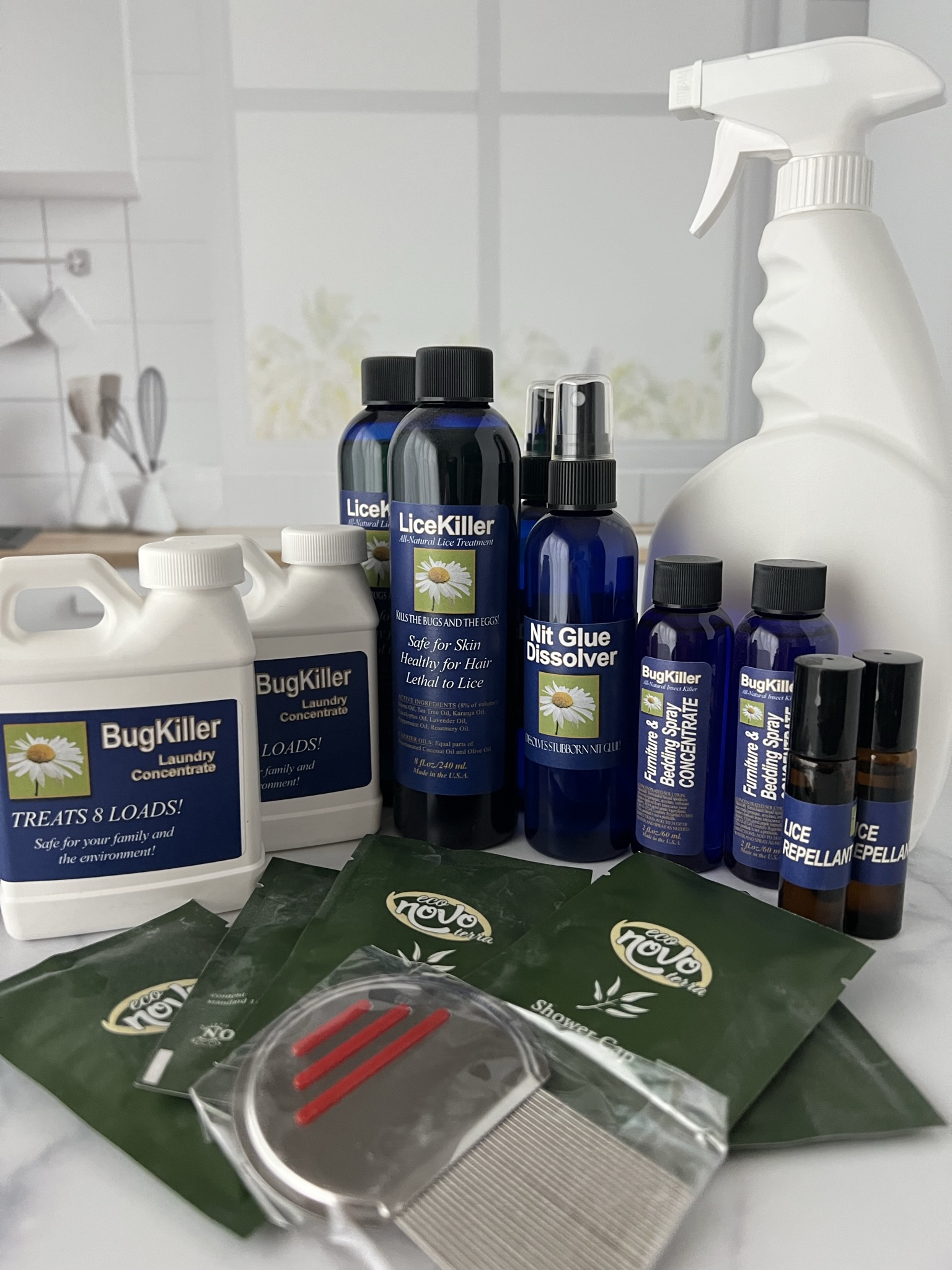
The "Everything You Need" kit - Medium size.
Don't Waste Another Week on Products That Don't Work
MothersAgainstHeadLice.org has been helping families navigate lice treatment since 2004. After testing countless products and hearing from over 100,000 families, we recommend LiceKiller.com's Everything You Need kits — the only system that kills live lice, dissolves nit glue, AND treats your home environment.
They're not the cheapest option.
They're the best.
MothersAgainstHeadLice.org is an independent educational resource helping families deal with head lice since 2004. LiceKiller.com is a product we recommend based on our testing and the results reported by the families we serve.
Sources:
- Downs AMR, Stafford KA, Harvey I, Coles GC. "Evidence for double resistance to permethrin and malathion in head lice." British Journal of Dermatology. 1999;141(3):508–511. https://pubmed.ncbi.nlm.nih.gov/10583056/
- Yoon KS, et al. "Expansion of the Knockdown Resistance Frequency Map for Human Head Lice in the United States Using Quantitative Sequencing." Journal of Medical Entomology. 2016;53(3):653–659. https://pmc.ncbi.nlm.nih.gov/articles/PMC4892812/
- Mohammadi J, et al. "Evaluation of resistance of human head lice to pyrethroid insecticides: A meta-analysis study." PMC. 2023. https://pmc.ncbi.nlm.nih.gov/articles/PMC10319209/
- "Relationship of Treatment-Resistant Head Lice to the Safety and Efficacy of Pediculicides." Mayo Clinic Proceedings. https://www.mayoclinicproceedings.org/article/S0025-6196(11)62289-1/fulltext
- American Academy of Pediatrics. "Head Lice." Pediatrics. 2022;150(4). https://publications.aap.org/pediatrics/article/150/4/e2022059282/189566/Head-Lice
- Clark JM. "Determination, mechanism and monitoring of knockdown resistance in permethrin-resistant human head lice." Journal of Asia-Pacific Entomology. 2009;12(1):1–7. https://pmc.ncbi.nlm.nih.gov/articles/PMC2727674/